

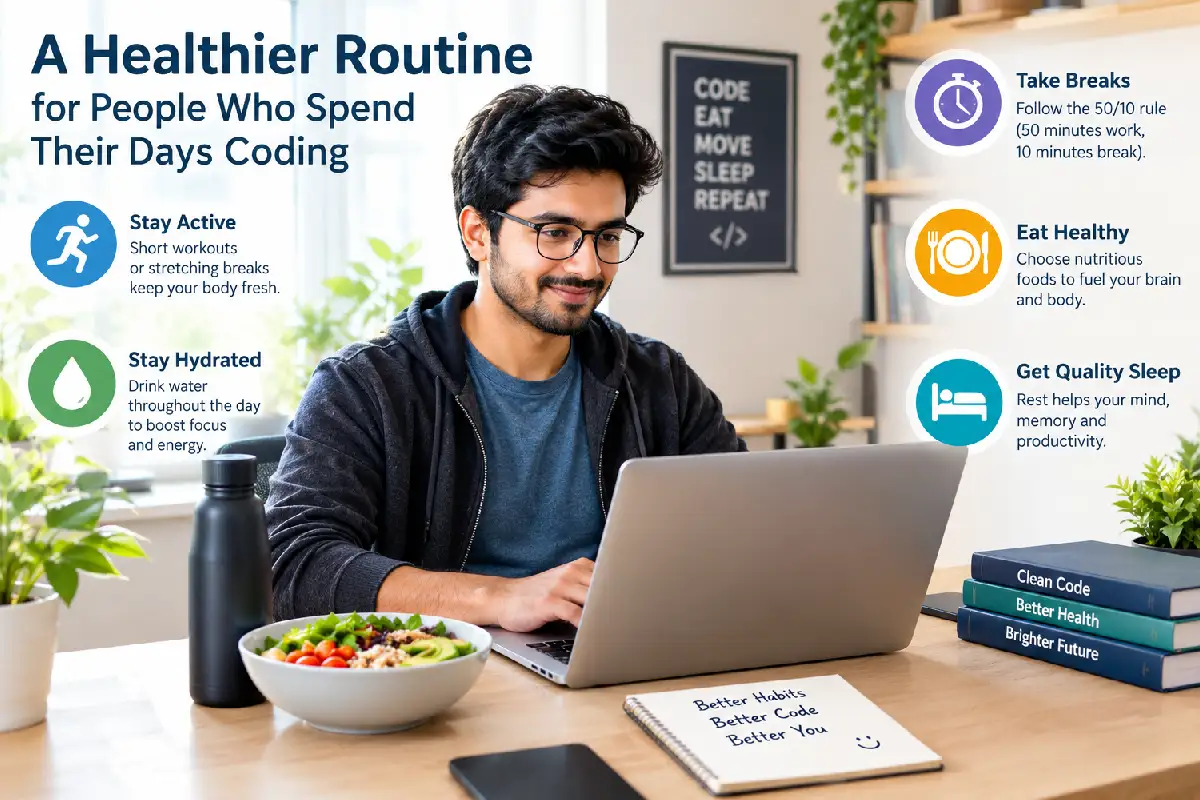
Programming can be creative and rewarding, but a day at a computer can also mean hours of sitting, little daylight and missed breaks. Those habits can affect comfort, energy and sleep over time. A few practical changes to your workspace and routine can make long coding sessions easier on your body without getting in the way of focused work.
This matters whether you code for a company, study software development or take on projects independently. Good habits are not a substitute for medical care, but they can help reduce everyday strain and make a demanding schedule more sustainable.
Table of Contents
Set Up Your Workspace for Comfort
A workstation does not need expensive equipment to be more comfortable. Start by adjusting the chair and screen to fit you. Sit with your feet supported, shoulders relaxed and elbows close to your sides. Position the monitor roughly an arm’s length away, with the top of the screen at or a little below eye level. If you work on a laptop for long stretches, a separate keyboard and mouse can make it easier to raise the screen without reaching awkwardly.
There is no single perfect posture to hold all day. The more useful goal is to avoid staying in one position for too long. Change how you sit, stand briefly or move around when you can. If your chair, desk or equipment causes persistent pain, consider asking a health professional or an ergonomics specialist for individual guidance.
Give Your Eyes Regular Breaks
Staring at code can leave eyes feeling dry, tired or unfocused. People often blink less when concentrating, and a bright screen against a dark room can add to discomfort. Adjust screen brightness to suit the room, increase text size if you find yourself leaning forward, and reduce glare by changing the screen angle or lighting.
Try taking short, regular pauses to look away from the monitor and focus on something farther away. Stand up, stretch or refill your water while you do. If eye discomfort keeps returning, or you notice changes in your vision, arrange an eye examination rather than assuming the screen is the only cause.
Break Up Long Periods of Sitting
Even a well-arranged desk cannot replace movement. Build small activity breaks into the workday: walk while taking a call, stretch between tasks, or set a reminder to stand every so often. A short walk at lunch can also provide a change of scenery and some daylight. The aim is not to turn every break into a workout. Frequent movement is easier to maintain than waiting until the end of a long day to make up for sitting.
For general health, adults benefit from regular physical activity across the week, including both aerobic movement and muscle-strengthening activity. Choose options that suit your ability and schedule, such as brisk walking, cycling, dancing or a home strength routine. If you have a health condition or are returning to exercise after a long break, ask a clinician what level is appropriate for you.
Protect Sleep and Focus
Late-night debugging can push bedtime back, while notifications and unfinished tasks can make it harder to switch off. Where possible, set a consistent end to the workday and give yourself a short wind-down period. Keep a note of the next task before closing your laptop; this can make it easier to leave work for tomorrow instead of mentally rehearsing it in bed.
Light, caffeine and timing all affect sleep differently from person to person. Notice what helps you feel rested. Try limiting caffeine later in the day if it disrupts your sleep, and avoid working in bed when you can. If sleep problems are persistent and affect daily life, speak with a healthcare professional.
Make Wellbeing Part of a Tech Career
Healthy routines are easier to keep when work expectations allow for them. Freelancers can set realistic project timelines, schedule breaks between client calls and include time for revisions rather than accepting every urgent request. Clear communication about availability helps clients understand when they can expect a reply.
Freelancers who sell a defined service can also make expectations clearer from the start. On Osdire, an offer can explain what is included, the delivery timeframe and what the buyer needs to provide. These freelance offer title examples show how specific wording helps a potential client understand the service before ordering. Clear boundaries around scope and deadlines can support a more manageable workload as well as a smoother project.
People who write about programming, software or the experience of working in tech may want to reach readers beyond their own site. A directory of programming guest posting sites can help writers identify publications that cover coding and development. If you contribute, choose a topic that genuinely helps that audience: for example, setting up a more comfortable home office or maintaining healthy routines during a remote-work day. Useful advice is more valuable than repeating general wellness tips without context.
Start With One Change
It can be tempting to overhaul your desk, exercise plan and bedtime all at once. A smaller first step is often more realistic: adjust the monitor today, take a short walk at lunch this week, or set a reminder to pause between coding sessions. Once that change becomes routine, add another. Sustainable habits are built through repeatable choices, not perfect days.
Long hours at a screen do not have to mean ignoring your health. With a comfortable setup, regular movement, eye breaks and a clearer boundary around work, developers can support their wellbeing while continuing to do focused, challenging work.