

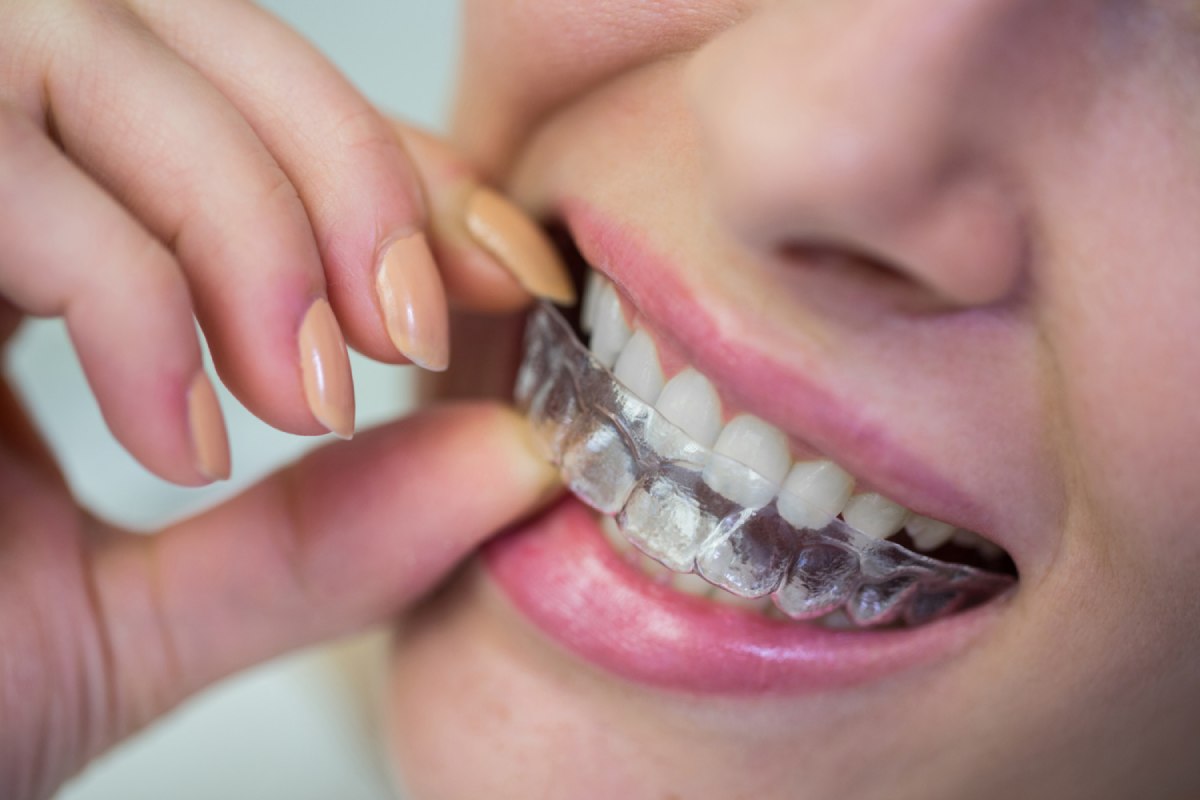
Wearing clear aligners to straighten your teeth is not a hands-off process. The responsibility lies on you to make sure the trays work effectively. Unlike fixed braces, which work around the clock regardless of what you do, aligners are only as good as the habits you build around them.
Any shortcut you take while cleaning, every additional hour you leave the aligners out, every cup of coffee you have mindlessly – all of this adds up and impacts the final outcome. Most people don’t realise how quickly small, seemingly harmless decisions compound over a treatment that can span a year or more.
Table of Contents
The 22-Hour Rule Isn’t A Suggestion
Aligners work by placing a steady, gentle pressure on the periodontal ligaments, the connective tissue fibres that anchor your teeth to the bone. When that pressure is interrupted for too long, those ligaments begin to relax. Your teeth won’t immediately drift back to where they started, but they’ll resist the next tray in the sequence. That resistance slows everything down and can knock your treatment off the carefully mapped course your orthodontist planned from the beginning.
The frustrating reality is that you only have around two hours each day outside of your aligners — enough time to eat, brush and floss, but not much else. That feels manageable on a normal day, but it falls apart quickly when you’re sitting through a long business lunch or a dinner that stretches across the whole evening.
The practical fix is something orthodontists call snack-stacking: collapsing everything you eat into two or three proper meals rather than grazing throughout the day. Every time you remove your aligners, you trigger a pH event — your mouth turns acidic, you have to wait, brush, and then reinsert. Run through that cycle six or seven times a day and your wear time quietly erodes, often without you noticing until your progress stalls.
What Goes Back In Your Mouth Matters
This is where most people underestimate the risk. When aligners sit against teeth for 20-plus hours, they create a sealed environment that restricts saliva flow. Saliva is the mouth’s primary defense against plaque biofilm – it dilutes acids, delivers minerals, and physically rinses the surface. Without it, anything trapped between the tray and the enamel just sits there.
Brush and floss after every meal, every time, without exception. A quick rinse and a swish aren’t enough. Interdental brushes are useful here. Teeth shift during treatment and the gaps between them change shape, which makes traditional floss harder to use consistently.
If you’re traveling or in a work meeting and can’t brush immediately, at minimum rinse your mouth thoroughly with water before reinserting the trays. That’s not ideal, but it’s better than trapping food debris for hours.
How To Clean The Aligners Themselves
Many people mistakenly believe that toothpaste will do the job. While it might seem logical – after all, you use it to clean your teeth – most toothpaste contains abrasive ingredients that can scratch or dull the surface of the clear thermoplastic material, gradually creating a home for bacteria. Plus, scratchy aligners can begin to look cloudy or stained as the scratches accumulate.
Hot water can potentially distort the alignment and ruin your treatment. Clear aligners are made from a plastic that’s especially formulated to be sensitive to heat by becoming pliable at a temperature that’s safe for the inside of your mouth. Clean your aligners in lukewarm water using an appropriate cleaning agent, and handle the situation from there.
Choosing The Right Provider And Product Matters Before Any Habit Does
All of the above daily discipline doesn’t do what it’s supposed to if the trays don’t fit properly to begin with. The quality of orthodontic teeth aligners directly determines how well they track against your teeth, how much pressure they can exert without warping, and whether attachments – the small composite bumps that aid in gripping teeth for more complicated movements – seat properly.
A poorly manufactured tray that gaps along the molars won’t respond to better cleaning habits. Before building your daily routine, make sure the foundation is right. Who made your aligners and how they were designed matters.
Switching Trays And Managing New Tray Pressure
The most uncomfortable time with a new tray is the first couple of days. The teeth are sore because they’re being pushed and moved into places they haven’t been in before. Soft tissue irritation is most likely to happen during the first day or two with a new tray because your tongue and cheeks are also coming into contact with places on the aligner they haven’t for a while.
Switching out your trays at night can solve all this. The settling in period occurs overnight while you’re asleep, so when you wake up you’re past the worst of any soreness. On top of that, you’ve spent the last 8 hours wearing your aligners with no effort. It’s the easiest transition most wearers never think to make.
Your Routine, Built Around Real Life
The idea is not to completely rearrange your life around an oral device. It’s a handful of behaviors that you eventually don’t have to put any thought into – meal times, bag brushing kits, lukewarm cleaning water, tray switch night.
Treatment stays on track, social situations stay manageable, and when you get to the retention phase with your retainer, you’ll actually have teeth worth protecting.