

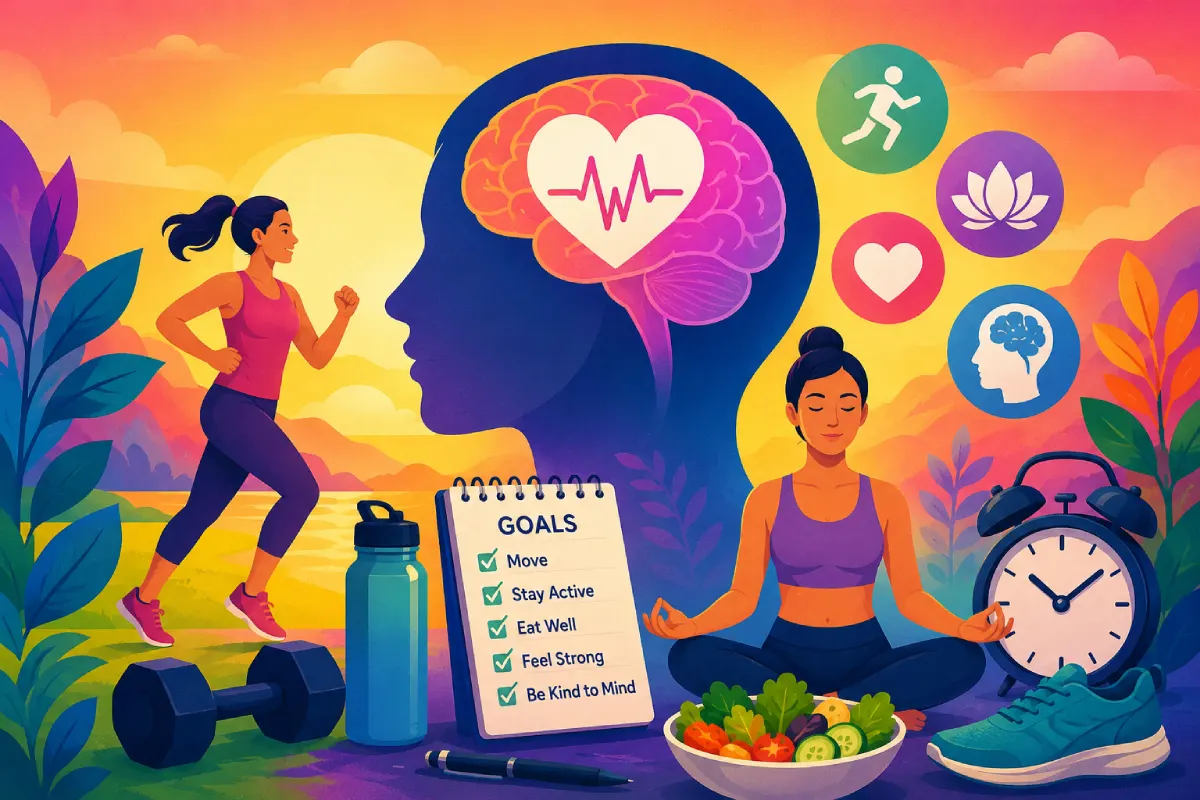
Fitness goals often start with a workout plan, a meal plan, or a number on a scale. Yet the part that keeps people going is usually mental. Motivation is shaped by mood, stress, confidence, sleep, self-talk, and the way a goal fits into daily life.
Lasting motivation does not mean feeling excited every day. It means building a mindset that can carry you through busy weeks, low-energy days, and slow progress. The goal is not perfection. The goal is a healthier relationship with movement.
Table of Contents
Why Fitness Motivation Starts in the Mind
Many people give up on fitness goals after a few missed workouts, not because of laziness, but because of all-or-nothing thinking. A skipped gym day becomes “I failed.” A tough week becomes “I’m not disciplined.” That mental pattern can make exercise feel like punishment instead of support.
Physical activity can support mental health, mood, sleep, and stress management, according to public health guidance from the CDC and WHO. Still, fitness works best when it is paired with realistic goals and emotional flexibility. When pressure gets too high, even healthy habits can start to feel draining.
For some people, mental support is part of the bigger fitness picture. Options like online therapy can help people work through stress, body image concerns, anxiety, or low motivation that may be getting in the way of healthy routines.
A stronger fitness mindset begins when you stop asking, “How do I force myself to work out?” and start asking, “What kind of routine can I actually return to again and again?”
7 Mental Tips for Building Lasting Fitness Motivation
1. Set goals that focus on behavior, not just results
Weight loss, muscle gain, and race times can be useful goals, but they can also feel far away. Behavior goals give you something to control today.
Instead of “lose 20 pounds,” try “walk for 20 minutes after dinner four days this week.” Instead of “get stronger,” try “complete two strength workouts each week.” These goals build trust with yourself. Each completed action becomes proof that you are someone who follows through.
Results matter, but behavior creates the path.
- Make your goal smaller than your ego wants
Big goals can feel exciting at first. Then real life shows up. Work runs late, sleep gets messy, family needs attention, and the perfect plan falls apart.
A smaller goal is not a weak goal. It is often the smarter one. Ten minutes of movement can keep the habit alive on a stressful day. A short home workout can help maintain consistency when going to the gym is not realistic.
Small wins also reduce the mental resistance that often blocks action. Starting feels easier when the task does not feel overwhelming.
3. Track how exercise makes you feel
Many people track steps, calories, miles, or reps. Those numbers can help, but they do not tell the whole story. Try tracking mood, energy, focus, stress, or sleep after workouts.
A simple note like “felt calmer after walking” or “slept better after lifting” trains your brain to connect exercise with real-life benefits. This matters on days when appearance-based goals feel slow.
When movement becomes tied to feeling better, not just looking different, motivation has a stronger base.
4. Replace harsh self-talk with useful self-talk
Negative self-talk can sound like discipline, but it often drains motivation. “I’m so out of shape” or “I always quit” may feel honest, yet those thoughts make it harder to start again.
Useful self-talk is more practical. Try phrases like “Just start with five minutes,” “One missed day is not the whole story,” or “This workout counts, even if it is not perfect.”
The goal is not fake positivity. The goal is language that helps you take the next step.
- Plan for low-motivation days before they happen
Motivation will dip. That is normal. A strong plan includes low-energy options.
Create a backup menu with three easy choices: a short walk, a stretch session, or one round of bodyweight moves. When motivation is low, choose from the menu rather than skipping movement altogether.
This keeps the habit alive while still respecting your energy. It also removes the need to make a big decision when your mind is already tired.
6. Stop using guilt as fuel
Guilt may get someone through one workout, but it rarely builds a healthy routine. If exercise is always linked to shame, food rules, or body criticism, it becomes easier to avoid.
A better fuel is respect. Move your body to care for it, strengthen it, support your mood, or feel more capable. This shift can make fitness feel less like a punishment and more like a steady form of self-care.
That mindset is especially helpful for people who have struggled with body image or repeated diet cycles.
7. Build identity, not just discipline
Discipline matters, but identity lasts longer. Instead of thinking, “I have to work out,” try thinking, “I am someone who takes care of my body.”
Identity grows through repeated action. Every walk, stretch, class, lift, or recovery day supports that belief. You do not need to train like an athlete to build a fitness identity. You only need to keep showing up in ways that fit your life.
Over time, fitness becomes less about chasing motivation and more about living in line with who you want to be.
Build a Routine Your Mind Can Trust
The mental side of fitness is not separate from the physical side. It shapes whether a goal feels possible, whether setbacks feel manageable, and whether movement becomes part of life.
Lasting motivation comes from realistic goals, kinder self-talk, flexible planning, and a routine that supports mental well-being. Some weeks will feel strong. Others will feel messy. Both can still count.
The best fitness goal is one you can return to with confidence, even after a hard day, a missed workout, or a stressful season.