

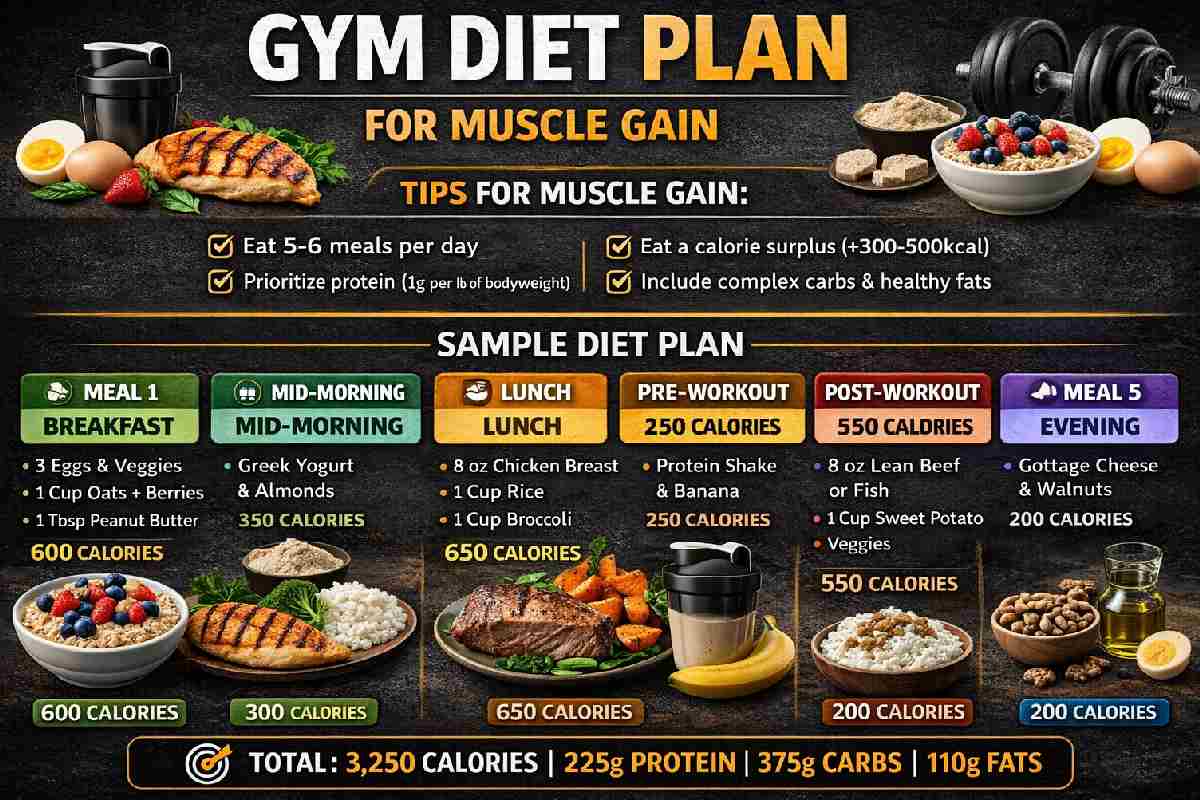
Building muscle is not just about lifting heavy weights—it’s about fueling your body with the right nutrients at the right time. A well-structured gym diet plan for muscle gain ensures optimal protein synthesis, recovery, and sustained energy.
Whether you’re a beginner or experienced lifter, this guide covers everything: calorie needs, macronutrients, vegetarian options, male/female plans, and even a 7-day meal plan for muscle gain.
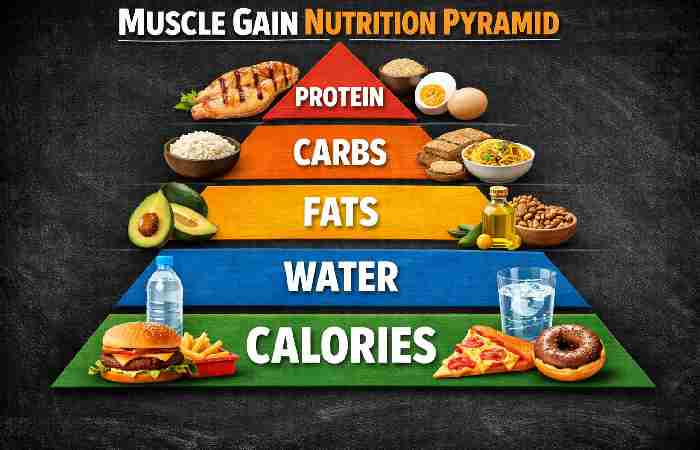
Muscle Gain Nutrition Pyramid
How to Calculate Calories for a Gym Diet Plan for Muscle Gain
To follow an effective gym diet plan for muscle gain, you must first understand your daily calorie needs. Muscle growth happens only when you maintain a calorie surplus.
Step-by-Step Calculation
| Step | Formula |
| Basal Metabolic Rate (BMR) | Body weight (kg) × 22 |
| Maintenance Calories | BMR × Activity Level |
| Muscle Gain Calories | Add 300–500 kcal |
Activity Level Guide
| Activity Level | Multiplier
|
| Sedentary | 1.2 |
| Moderate | 1.5 |
| Active | 1.7 |
Example:
- If your weight is 70 kg →
- BMR = 70 × 22 = 1540 kcal
- Maintenance = 1540 × 1.5 = 2310 kcal
- Muscle Gain Target = 2600–2800 kcal
Gym Diet Plan for Muscle Gain: Global Nutrition Standards
A gym diet plan for muscle gain may vary across countries due to food availability, cultural preferences, and lifestyle. However, global nutrition science remains consistent.
International Muscle Gain Guidelines
| Organization | Recommendation |
| World Health Organization | Balanced diet with adequate protein and calories |
| International Society of Sports Nutrition | 1.4–2.0g protein per kg body weight |
| American College of Sports Medicine | Combine resistance training with nutrition |
What is a Gym Diet Plan for Muscle Gain?
A gym diet plan for muscle gain is a structured nutritional strategy designed to:
- Increase lean muscle mass
- Improve strength and recovery
- Support intense workouts
Key Principles:
- Calorie surplus (eat more than you burn)
- High protein intake
- Balanced carbs and healthy fats
- Proper meal timing
Why Nutrition is Critical for Muscle Growth
Without proper nutrition:
- Muscle repair slows down
- Energy levels drop
- Gains become minimal
Key Factors for Muscle Growth
| Factor | Role in Muscle Gain |
| Protein | Repairs and builds muscle fibers |
| Carbohydrates | Provides workout energy |
| Fats | Hormone regulation (testosterone) |
| Calories | Essential for growth surplus |
| Hydration | Improves performance |
Daily Macronutrient Breakdown
A good gym diet plan for muscle gain follows this ratio:
| Nutrient | Recommended Intake |
| Protein | 1.6–2.2g per kg body weight |
| Carbs | 3–6g per kg body weight |
| Fats | 0.8–1g per kg body weight |
Gym Diet Plan for Muscle Gain Around the World
Different regions follow different muscle-building diets, but all align with the same principles.
Regional Diet Examples
| Region | Common Muscle Gain Foods |
| USA | Chicken, quinoa, protein shakes |
| Europe | Fish, whole grains, cheese |
| India | Rice, dal, paneer |
| Japan | Fish, rice, tofu |
| Middle East | Lamb, yogurt, flatbread |
Gym Diet Plan for Muscle Gain for Different Body Types
Your body type affects how you respond to a gym diet plan.
Body Type Nutrition Strategy
| Body Type | Strategy |
| Ectomorph | High calories, frequent meals |
| Mesomorph | Balanced macros |
| Endomorph | Controlled carbs, high protein |
Gym Diet Plan for Muscle Gain (Male)
Men typically require higher calories due to muscle mass and metabolism.
Sample Daily Plan
| Meal | Food |
| Breakfast | Oats + milk + banana + peanut butter |
| Mid Snack | Boiled eggs + fruit |
| Lunch | Rice + chicken + vegetables |
| Pre-workout | Banana + black coffee |
| Post-workout | Whey protein + dates |
| Dinner | Chapati + paneer/chicken |
| Before Bed | Milk or curd |
Gym Diet Plan for Muscle Gain (Women)
Women require slightly fewer calories but equal protein importance.
| Meal | Food |
| Breakfast | Smoothie (milk + oats + fruits) |
| Snack | Nuts + yogurt |
| Lunch | Brown rice + dal + veggies |
| Pre-workout | Apple + peanut butter |
| Post-workout | Protein shake |
| Dinner | Roti + paneer/soy chunks |
Gym Diet Plan for Muscle Gain Vegetarian
Vegetarians can build muscle effectively with proper protein sources.
High-Protein Vegetarian Foods
| Food | Protein (per 100g) |
| Paneer | 18g |
| Soy chunks | 52g |
| Lentils | 9g |
| Chickpeas | 19g |
| Tofu | 8g |
Tips:
- Combine grains + legumes
- Include dairy or soy protein
- Use protein supplements if needed
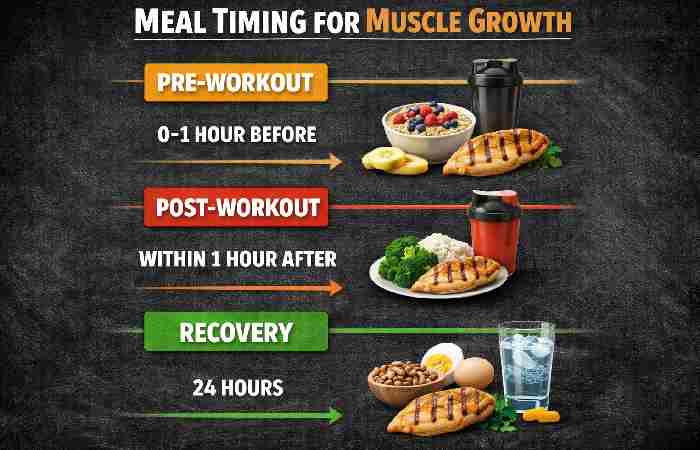
Meal Timing for Muscle Growth
Gym Diet Plan for Muscle Gain at Home
You don’t need expensive foods—simple home meals work.
Budget-Friendly Plan
| Meal | Food |
| Breakfast | Eggs + roti |
| Lunch | Rice + dal |
| Snack | Peanut chikki |
| Dinner | Vegetable curry + chapati |
7-Day Meal Plan for Muscle Gain
Weekly Plan Table
| Day | Breakfast | Lunch | Dinner |
| Day 1 | Oats + milk | Rice + chicken | Roti + paneer |
| Day 2 | Eggs + toast | Dal + rice | Chicken salad |
| Day 3 | Smoothie | Veg pulao | Paneer curry |
| Day 4 | Upma | Chicken + rice | Dal + roti |
| Day 5 | Poha | Rajma + rice | Paneer |
| Day 6 | Omelette | Fish + rice | Veg curry |
| Day 7 | Paratha | Chicken curry | Dal |
7-Day Meal Plan for Muscle Gain (Male)
Men can increase portion sizes:
- Add extra rice/chapati
- Include 2 protein shakes daily
- Increase calorie intake by 300–500 kcal
Best Foods for Muscle Gain
- Protein Sources
- Chicken breast
- Eggs
- Fish
- Paneer
- Whey protein
- Carb Sources
- Rice
- Oats
- Sweet potatoes
- Whole grains
- Healthy Fats
- Nuts
- Seeds
- Olive oil
Pre-Workout and Post-Workout Nutrition
- Pre-Workout (30–60 mins before)
- Banana + coffee
- Oats
- Post-Workout (within 30 mins)
- Protein shake
- Fast-digest carbs (dates, banana)
High Authority Resource
National Institute of Health (NIH) – Protein Intake Research
https://www.ncbi.nlm.nih.gov/
Harvard Nutrition Source
https://www.hsph.harvard.edu/nutritionsource/
Place these links under a small section titled “Scientific Research on Muscle Gain” in the middle of your article
Advanced Muscle Gain Strategies Used Worldwide
Professional athletes follow advanced techniques:
Strategies:
- Progressive overload training
- Carb cycling
- Nutrient timing
- Periodized diet plans
Global Mistakes People Make in Muscle Gain Diet
Across the world, people make similar mistakes:
- Following trendy diets without research
- Ignoring protein intake
- Over-relying on supplements
- Not tracking calories
Common Mistakes in Muscle Gain Diet
- Not eating enough calories
- Skipping protein
- Overtraining without recovery
- Ignoring hydration
Supplement Safety and Global Standards
Not all supplements are regulated equally worldwide.
| Region | Regulation Authority |
| USA | Food and Drug Administration |
| Europe | European Food Safety Authority |
| India | Food Safety and Standards Authority of India |
Importance of Hydration in a Gym Diet Plan for Muscle Gain
Water is often ignored, but it is essential in any gym diet plan.
Hydration Guidelines
| Body Weight | Daily Water Intake |
| 50–60 kg | 2–2.5 liters |
| 60–80 kg | 2.5–3.5 liters |
| 80+ kg | 3.5–4.5 liters |
Benefits:
- Improves strength
- Enhances nutrient absorption
- Prevents fatigue
Supplements for Muscle Gain
| Supplement | Benefit |
| Whey Protein | Quick protein source |
| Creatine | Strength & performance |
| BCAA | Muscle recovery |
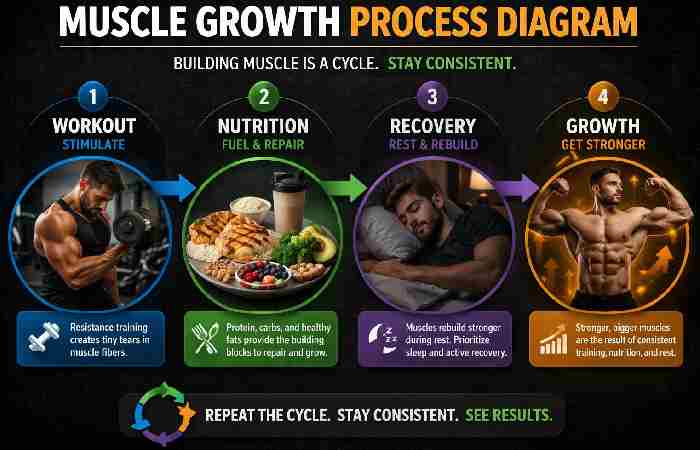
Muscle Growth Process Diagram
Quick Tips
- Eat every 3–4 hours
- Stay hydrated
- Sleep 7–8 hours
- Track calories
- Stay consistent
Who Should Follow This Plan?
This gym diet plan for muscle gain is ideal for:
- Beginners starting gym
- Skinny individuals (ectomorphs)
- Athletes wanting strength
- Men and women both
Asked Questions on Gym Diet Plan for Muscle Gain Frequently
Can I gain muscle without supplements?
Yes, a proper gym diet plan for muscle gain with whole foods is enough.
How long does it take to gain muscle?
Typically 4–8 weeks with proper diet and training.
Is whey protein necessary?
Not mandatory, but convenient.
Conclusion
A well-structured gym diet plan for muscle gain is the foundation of building a strong and muscular body. Whether you follow a vegetarian diet, train at home, or hit the gym daily, consistency in nutrition matters most.
By combining:
- Proper calorie surplus
- Balanced macronutrients
- Smart meal timing
- You can achieve sustainable muscle growth.